


How biofilms in your pipes could be affecting water quality
When it comes to maintaining clean and safe water in our homes and buildings, most of us think about filtration systems or regular maintenance. There is another factor that can significantly affect water quality: biofilms. These often-overlooked layers of microorganisms thrive in plumbing systems and pose various risks, including the growth of harmful bacteria like Legionella.
What are biofilms?
Biofilms are complex communities of microorganisms that attach themselves to surfaces in moist environments. These communities are encased in a self-produced matrix of a sticky, mucus-like substance, which protects them from external threats and helps them adhere to surfaces and to each other. The slimy layer can contain bacteria, fungi, algae and other microorganisms, all living together in a coordinated manner.
How are biofilms formed?
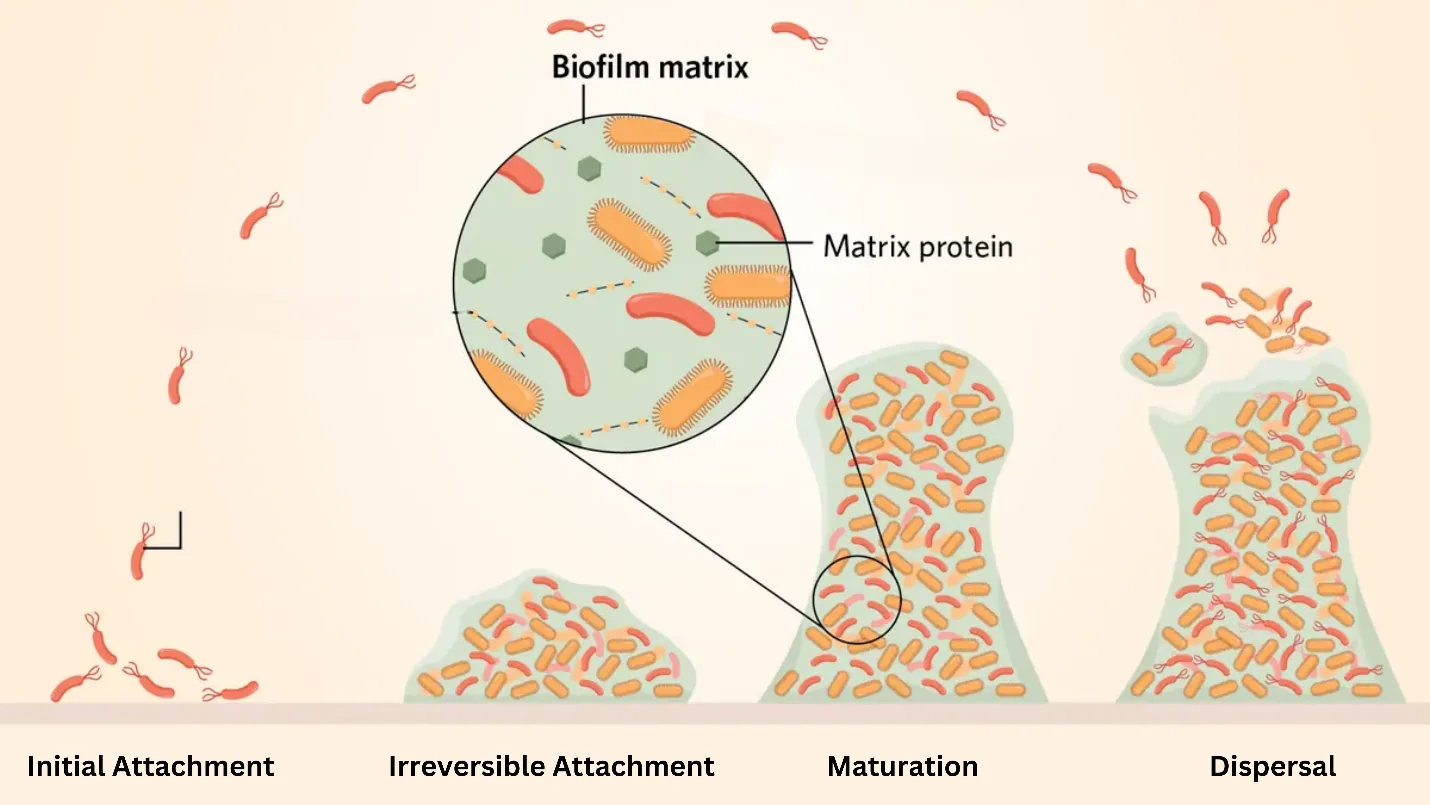
The formation of a biofilm follows a series of steps.
- 01Initial attachment. Free-floating microorganisms, usually bacteria, encounter a surface and attach to it using weak, reversible bonds.
- 02Irreversible attachment. Once attached, these microorganisms produce a sticky proteinaceous matrix, strengthening their hold on the surface and trapping nutrients to help them survive and grow.
- 03Maturation. The biofilm grows as more free-floating cells join and the extracellular matrix expands. Microscopic channels form within the matrix, distributing nutrients and removing waste. At this stage biofilms are highly resilient against environmental toxins.
- 04Dispersal. Parts of the biofilm break off, releasing microorganisms back into the environment to colonise new surfaces.
How do biofilms affect plumbing systems?
Plumbing provides an ideal environment for biofilm formation. The combination of moisture, nutrients and surface area within pipes encourages microbial colonisation. Water stagnation, varying temperatures and the presence of organic matter all contribute to their growth and persistence.
Biofilms can develop in various parts of a plumbing system: the inner surfaces of pipes and fittings, the walls of water storage tanks where water may sit for extended periods, and aerators and taps, especially if they are not regularly cleaned.
Biofilms can negatively affect water quality by creating taste and odour problems. The metabolic activities of biofilm-associated microorganisms produce compounds that change the taste and smell of water, and may also discolour it. Biofilms also drive corrosion of pipes, leading to structural damage and potential leaks.
They create health concerns too. While not all biofilms are harmful, they can harbour pathogenic microorganisms. They provide a protective environment for Legionella bacteria, which causes Legionnaires' disease. Legionella thrives in warm water systems, making biofilms in plumbing a particular concern in large buildings. Biofilms can also shelter other harmful bacteria such as Pseudomonas aeruginosa and Mycobacterium avium, which cause infections in susceptible individuals.
Biofilms reduce the effectiveness of water treatment. They shield bacteria from disinfectants like chlorine, which is why managing them is crucial to maintaining water quality and safety.
How do we manage biofilms in plumbing?
Maintaining a clean and well-functioning plumbing system is essential for controlling biofilms. Regular flushing of pipes, cleaning of water storage tanks and routine inspection of components all help prevent formation and manage the associated risks. Several approaches are used.
Chemical treatments: chlorine and chloramine are commonly used disinfectants that help control biofilm growth, though their effectiveness is limited by the protective nature of the biofilm matrix. Biocides specifically target and kill microorganisms within biofilms, and can be used periodically to disrupt formation and reduce microbial populations.
Physical methods: a high-pressure flush uses water to dislodge biofilms from pipe surfaces. Ultrasonic waves can break up biofilms, making them easier to remove through flushing.
Advanced methods: ultraviolet light can penetrate biofilms and inactivate microorganisms, and UV treatment systems can be installed in water lines to treat water continuously and prevent regrowth. Antimicrobial coatings may also be applied to pipes and plumbing components to inhibit formation.
Case study: biofilms and Legionella
Consider a large residential complex with ageing plumbing infrastructure. Over time, biofilms have developed within the pipes, creating a habitat for Legionella. During routine water testing, elevated levels are detected, prompting immediate action.
The building management team implements a multi-faceted approach: a high concentration of disinfectant is introduced to target biofilm-associated bacteria; the entire system is flushed with high-pressure water to remove loosened biofilm and debris; a UV disinfection unit is installed at the point of entry to provide ongoing protection against microbial growth; and routine water testing is conducted to confirm that biofilm and Legionella levels remain under control.
Following these interventions the building experiences a significant reduction in biofilm-related issues and Legionella levels. Ongoing maintenance and monitoring keep the water system safe and reliable for residents.
Conclusion
Biofilms in plumbing systems are an often-overlooked factor that can significantly affect water quality and safety. While they can harbour harmful microorganisms like Legionella, the risks can be managed with regular maintenance, effective treatments and advanced technologies. Whether you are a homeowner or a building manager, staying informed about biofilms and their potential impacts is worth the attention. When it comes to water quality, a little prevention goes a long way.